



Bramble Network
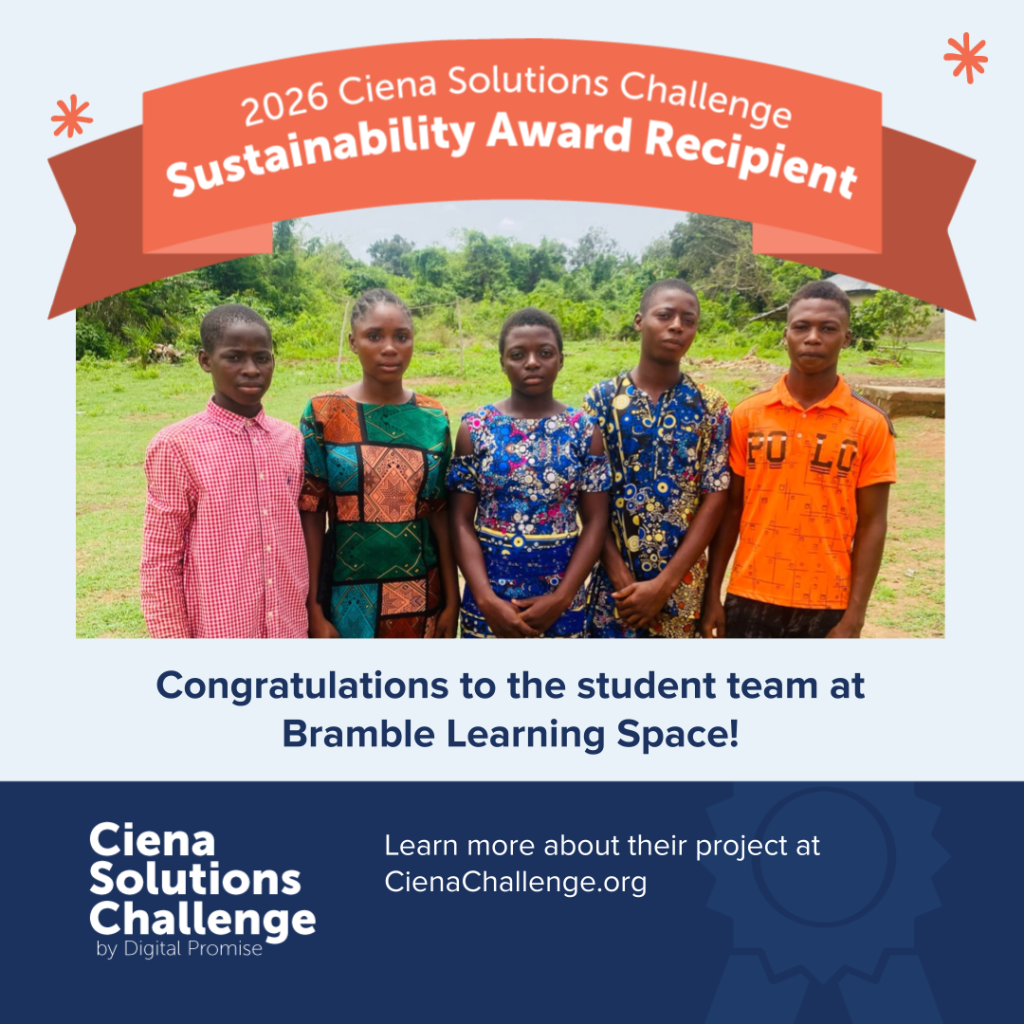
This week, we celebrate our learners’ remarkable effort in winning the 2026 Ciena Solutions Sustainability Award. This achievement affirms our mission of raising independent-minded and critical-thinking learners who can translate what they know into practical solutions that address real-life problems.
They emerged as winners of this year’s challenge after designing a project titled “Empower Rural”, an initiative aimed at equipping young people with skills that can support financial independence.
How The Idea Took Shape
Our learners’ journey to developing the “Empower Rural” project began with a brainstorming session. They were asked a series of questions focused on identifying common challenges within their communities.
After identifying a major issue, they discussed it further and explored possible solutions. The outcome of this process was the recognition of a gap in skill acquisition that could support financial independence among young people in their community. Many of the youth between the ages of 15–17 are often engaged in farming activities without access to structured opportunities to learn income-generating skills.
To address this, the learners developed “Empower Rural.” As the name suggests, the project is targeted at young people in rural areas, particularly young girls and women. Following the project framework outlined by Ciena Solutions Sustainability, which includes investigation, planning, and implementation, the learners structured their approach accordingly.
A six-month timeframe was set for the execution of the project. It will be implemented across three villages; Arikanki, Oretu, and Fakore. It will also feature hands-on training in cosmetology, soap and shampoo making, Adire production, and fashion designing.
By the end of the six months, participants are expected to have gained practical skills that can support starting small businesses, while five active participants will receive financial support to begin their ventures and connection to local markets to exhibit their products.
Building For Long-term Impact
While it is important to design projects that address immediate challenges, sustainability remains key to ensuring long-term impact, particularly in rural communities. This aligns with broader global development goals that emphasize quality education, decent work, and economic growth.
Our learners demonstrated an understanding of this by structuring the project to include six months of hands-on training, rather than short-term or theoretical instruction. Participants are also encouraged to build businesses around the skills they acquire. In addition, the project includes basic training on content creation, equipping participants with the ability to photograph and present their products for visibility in digital spaces.
Having won last year’s Ciena Solutions Sustainability Award with a project titled “Digital Elevate Program,” this year’s achievement further demonstrates that our learners are becoming more aware of their environment and more capable of developing practical solutions to everyday challenges.
As an organization operating within rural communities, our goal goes beyond raising independent-minded learners. We are committed to nurturing individuals who can apply their knowledge to improve their communities and contribute meaningfully to the lives of others. Our learning models are designed to encourage this, and opportunities like this provide a platform for learners to demonstrate their problem-solving and critical thinking abilities.
Education should not be limited to academic outcomes alone. It should raise individuals who are knowledgeable, innovative, and solution-oriented. When learners are equipped in this way, they are better positioned to contribute to broader development goals, making education a tool not just for personal growth, but for collective progress across both rural and urban communities.